Warm, Not Worried: A Pre-Winter MOT for Your Electric Blanket
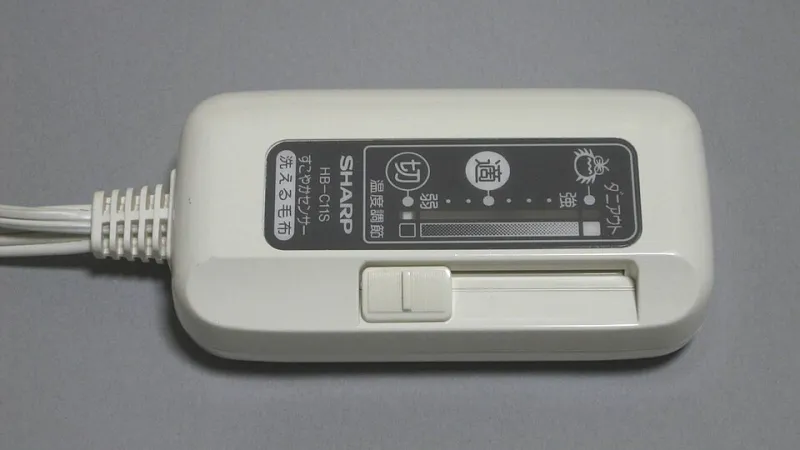
Photo: Qurren, CC BY-SA 3.0, via Wikimedia Commons
Electric blankets have a habit of reappearing like old friends: pulled out of the airing cupboard, draped over the bed, and trusted immediately. That trust is the problem. A blanket is a mains appliance that spends its life being folded, sat on, washed around and packed away—so it deserves a proper check before it earns a place under the duvet.
This is not a full PAT test, and it is not a licence to start dismantling controllers. Think of it as a pre-winter MOT you can do at home in about fifteen minutes, with the blanket unplugged, a basic plug-in energy monitor, and a healthy suspicion of anything that looks, smells or feels wrong.
Start with the label, not the duvet
Find the rating label—usually stitched into a corner or printed on a tag near the controller. You are looking for the model number, voltage, wattage, washing instructions and any safety markings. If the label has worn away completely, that is not a minor cosmetic issue. Without it, you cannot confirm the blanket is suitable for its controller, safe to wash, or even the right type for your bed.
Age matters too. Many electric blankets are built to last around a decade, but the useful life depends on use and storage. If yours is second-hand, inherited, or simply older than you can remember, treat it with extra caution. A replacement blanket is cheaper than a replacement bedroom.
Also check what kind of blanket it is. An underblanket and an overblanket are not interchangeable, and some blankets are not suitable for memory foam mattresses or for use with certain bed frames. If the instructions are long gone, look up the model online before you plug it in.
The plug is part of the appliance
Unplug the blanket from the wall and have a good look at the plug. You are checking for cracks in the casing, brown scorch marks, loose pins, a missing fuse cover, or a cable that is being pulled tight where it enters the plug. A plug that feels hot in normal use—not just slightly warm—is a warning sign. So is any smell of hot plastic or a faint burning whiff near the controller.
Most UK electric blankets come with a moulded plug and a fuse chosen by the manufacturer. Do not swap the fuse for a bigger one to stop it blowing. If a fuse blows, that is information, not an inconvenience. Replace it only with the same rating stated in the instructions, and if it blows again, stop using the blanket.
Where possible, plug the blanket directly into a wall socket rather than an extension lead. Avoid daisy-chaining adaptors, and keep the plug and controller out from under the mattress or duvet where heat can build up. If your home has RCD protection, use it; if you are unsure, a plug-in RCD adaptor is a sensible backstop for any mains appliance used near a bed.
Controller, cable and the handshake
The controller is the part that gets the most physical abuse: knocked, dropped, sat on and shoved into a drawer. Check that the switches or sliders move cleanly and that the casing is not cracked. Look at the cable where it leaves the controller and where it enters the blanket. Fraying, exposed inner wires, sharp kinks or a cable crushed by a bed frame are all retirement offences.
With the blanket unplugged, run your hand slowly across the whole surface. You are feeling for lumps, hard spots, scorch marks or areas where the internal element feels different from the rest. Do not pin anything through the blanket, and do not fold it tightly along the same crease every year. Crushed elements are exactly the sort of fault a visual check is meant to catch.
If you find damage, do not try to repair the element yourself. Electric blankets are not a sensible DIY project, and a neat bit of soldering does not make a tired heating element safe.
What an energy monitor can tell you
A basic plug-in energy monitor gives you a second opinion without opening anything up. Plug the monitor into the wall, plug the blanket into the monitor, and switch on. Set the blanket to its highest setting for a short supervised test—ten to fifteen minutes is plenty—and compare the wattage reading with the rating label.
A blanket rated at around 60W should draw roughly that when it is heating. If the monitor reads zero, wildly high, or jumps around inconsistently between settings, investigate. It might be a controller fault, a damaged element or simply a blanket that is not doing what its label claims. An energy monitor will not detect every fault, and it is not a substitute for professional testing, but it is a useful sanity check before the blanket goes back on the bed.
When to call it a day
Retire the blanket if the plug or cable is damaged, if there are scorch marks or hard lumps, if the controller crackles or feels loose, or if the heat is patchy. Be especially cautious with older blankets that have no timer or auto shut-off. If you cannot find instructions and cannot confirm how it is meant to be used, do not leave it switched on overnight.
A smart plug can be a useful backstop for switching the blanket off, but it is not a substitute for the blanket’s own timer or safety cut-out. A smart plug does not monitor the element, sense a crushed cable or know that a controller is failing. It can switch the power off; it cannot make an old blanket safe.
Storage that survives to next winter
When the cold snap passes, let the blanket cool completely, unplug it, and roll it loosely rather than folding it sharply. Store it in a dry, breathable bag in a cupboard—not under a pile of heavy boxes, not in a damp garage, and not somewhere pets can chew the cable. Wash it only if the label says it can be washed, and make sure it is completely dry before it goes anywhere near a socket.
Before the first cold night, give the plug and controller a quick feel, check the cable is not trapped, and lay the blanket flat rather than bunched up. Warmth should feel boring. If anything about the blanket makes you pause, switch it off at the wall and trust that instinct.