From Dead Router to Confident Joint: Building a Sub-£40 Soldering Bench for Winter Evenings
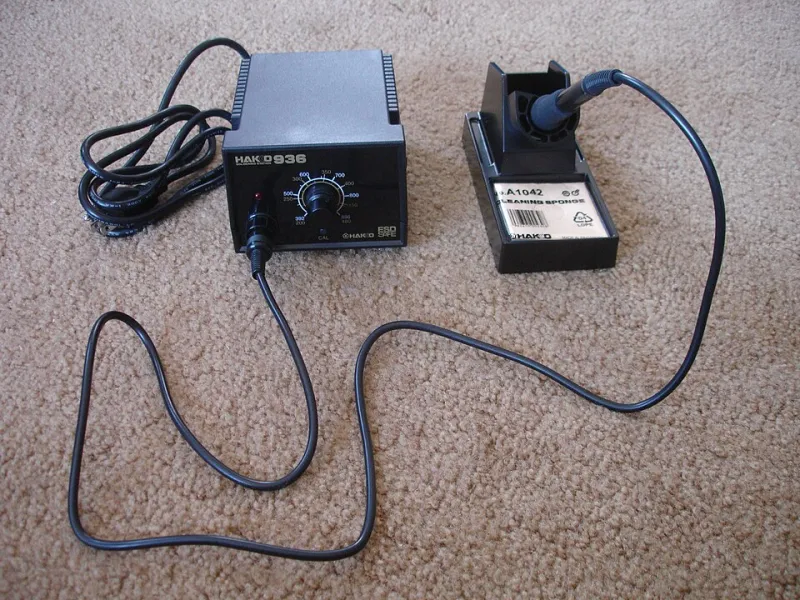
Photo: Zuzu, CC BY-SA 3.0, via Wikimedia Commons
There is a particular kind of January evening — rain on the window, tea going cold, nothing on telly — that is perfect for learning to solder. You are indoors anyway. The stakes are low. And if you have been quietly hoarding a drawer of dead remotes, a router that gave up in 2021 and a toy that stopped squeaking, you already own your practice material.
Through-hole soldering is the friendly end of electronics repair. Components have legs, boards have holes, and the joint is right there in front of you. It is also the skill that unlocks a surprising amount of everything else, from replacing a tact switch in a mouse to reflowing the cracked joints on a headphone jack that only works when you hold the cable at 40 degrees.
What £40 actually gets you in 2026
The market has split into two camps: temperature-controlled irons that cost £22–£35, and unbranded pencil irons for £8 that have no dial and no idea what temperature they are. Skip the second group. A cheap fixed-wattage iron runs hot enough to lift pads off a board and cool enough to give you grey, grainy joints — often in the same session.
A workable kit, bought separately rather than as a boxed set:
- Temperature-controlled iron, 60–65W, with a decent chisel or conical tip. Expect £25–£30 from CPC, RS or a reputable Amazon seller.
- Stand with a brass-wool pot. The coil stand in the box is usually fine; brass wool beats a wet sponge for tip life.
- Solder, 0.7–1.0mm. Lead-free is the default for anything you might give away or sell; 63/37 leaded flows more easily if you are learning and are disciplined about hand-washing.
- Flux pen, £4–6. This is the single biggest upgrade to a beginner's results.
- Desoldering braid, 2mm, plus a cheap spring-loaded solder sucker.
- Flush cutters, £4. Do not use kitchen scissors. Do not use your teeth.
- A silicone mat and a bit of isopropyl alcohol for cleaning.
That lands close to £40 if you buy sensibly and skip the multi-tip sets nobody uses. If you already own flush cutters, you have room for a second tip.
Safety, because this is a hot metal stick
Soldering is not dangerous, but it is unforgiving of bad habits. Four things matter more than technique.
Ventilation. Flux fumes are a respiratory irritant whether you use leaded or lead-free solder. Work near an open window, or put a small fan pulling air away from your face. A £20 fume extractor with a carbon filter is a nice-to-have, not a substitute for airflow.
The plug. Before anything else, check the iron's lead and plug for damage, and plug into a wall socket rather than a daisy-chained extension. If your iron came from a car boot, treat the flex as suspect until proven otherwise.
The workspace. A heatproof mat, a clear 30cm around the iron, no drinks within elbow range, and never leave it switched on when you leave the room. Tin the tip before you switch off — it prevents oxidation and makes the next session easier.
Yourself. Safety glasses when clipping component legs, because they genuinely do ping across the room. Wash your hands after handling solder, especially leaded. Keep pets and small children out of the room while the iron is hot.
Practice boards that owe you nothing
Before you touch anything you care about, ruin something disposable. Good candidates: a dead router, an old TV remote, a Freecycle microwave that is already beyond saving, or a £1 'untested' radio from a charity shop. The point is not to fix it. The point is to desolder joints, look at the result and do it again.
A simple drill: pick a resistor leg, add a touch of fresh solder, heat the joint for two seconds, pull the leg with tweezers. Then clean the hole with braid and flux and put it back. Twenty repetitions will teach you more than any video.
If you want something with a satisfying ending, £5 through-hole practice kits — LED chasers, blinking badges, a small continuity tester — are all over the usual marketplaces and give you a finished object at the end.
Three first projects worth doing
Reflow a cracked jack. The classic 'works if I hold the cable' fault on a 3.5mm socket is usually a cracked solder joint, not a dead socket. Add flux, add a little fresh solder, heat for two or three seconds, let it cool undisturbed.
Swap a tact switch. A mouse that double-clicks or a kettle that only responds to a firm prod often just needs a new switch. Four legs, through-hole, £2 for a pack of ten.
Repair a toy or a torch. Battery contact springs, broken wires at a strain relief, a corroded switch. Low stakes, high satisfaction, and you will learn how much heat a plastic housing will tolerate before it goes soft.
The joints to look for
A good joint is shiny, concave and small — a little volcano around the leg. A cold joint is dull, blobby or grainy, and it will fail. If you see one, add flux and reheat; do not pile on more solder. Lead-free solder wants roughly 350–380°C on the dial, but the joint, not the number, tells you the truth. Heat the pad and the leg together for two to three seconds, feed solder into the joint rather than onto the iron, and hold still while it sets.
Where to spend, where to save
Spend on temperature control and a good tip. Save on the stand, the mat, the sucker — the cheap versions are fine. Buy braid from a known brand, because the no-name stuff is often just copper-plated hope.
And keep the finished things out of landfill. The UK's right-to-repair rules have made spares slightly less hostile to find each year, but the repair that matters most is the one you can do yourself on a wet Tuesday. That is the whole point of a £40 box of tools.